
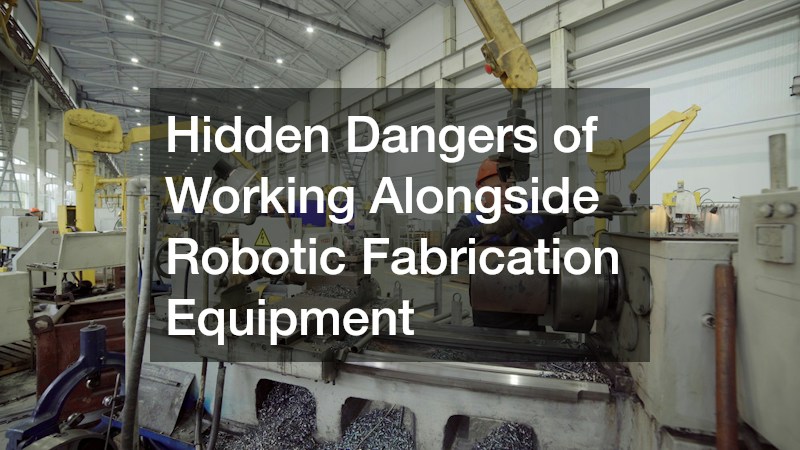
Automated machinery now shares floor space with people in manufacturing plants, warehouses, and even small workshops, and that shift has introduced risks most workers and visitors never anticipate. Unlike a human coworker, a robotic arm or automated cutting system cannot see you, sense your distraction, or stop out of instinct. Whether you are a facility manager, a new employee, or simply someone touring a plant for business reasons, understanding these hazards can mean the difference between a safe visit and a serious injury.
This article breaks down the real dangers lurking around automated equipment and what you should know before stepping anywhere near it.
Unpredictable Movement Patterns in Automated Equipment
Many people assume automated machines move in slow, predictable loops, but modern systems often change paths dynamically based on sensor input, production schedules, or software updates. A machine that was stationary moments ago can suddenly swing, extend, or rotate without any visible warning sign. This unpredictability is one of the most overlooked hazards for anyone unfamiliar with how these systems actually operate. Even trained operators can misjudge timing if a machine’s programming has recently changed.
The danger grows when multiple machines work in coordination, since one unit’s movement can trigger a chain reaction in another. People who assume a quiet machine is a safe machine are often the ones who get hurt. Facilities that rely heavily on robotic fabrication processes typically program complex motion sequences that are not intuitive to the untrained eye. That complexity is exactly why visitors and new hires need orientation before entering active work zones.
- Machines may resume motion after a pause without audible warning
- Sensor-based systems can react to triggers invisible to bystanders
- Coordinated equipment can move in sequence rather than isolation
- Software updates can alter movement patterns overnight
Blind Spots Around Industrial Work Cells
Industrial work cells are often surrounded by physical barriers, but those barriers do not guarantee full visibility for either the equipment or the people nearby. Cameras and sensors have coverage gaps, and a person standing in the wrong spot may be completely invisible to the system’s detection range. This is especially risky near loading areas where materials block sightlines. Workers who assume the technology will always detect them are placing too much trust in systems that have known limitations.
Lighting conditions also affect how well sensors and cameras perform, and poorly lit corners of a facility can create dangerous gaps in coverage. Reflective surfaces, dust, and debris can further confuse optical sensors, leading to delayed reactions from the equipment. Anyone working near these zones should treat marked boundaries as firm limits rather than suggestions.
- Material stacks and pallets can obstruct sensor lines of sight
- Dim or inconsistent lighting reduces camera accuracy
- Dust and debris buildup can interfere with optical detection
- Reflective metal surfaces can scatter sensor signals
Noise and Communication Barriers on the Factory Floor
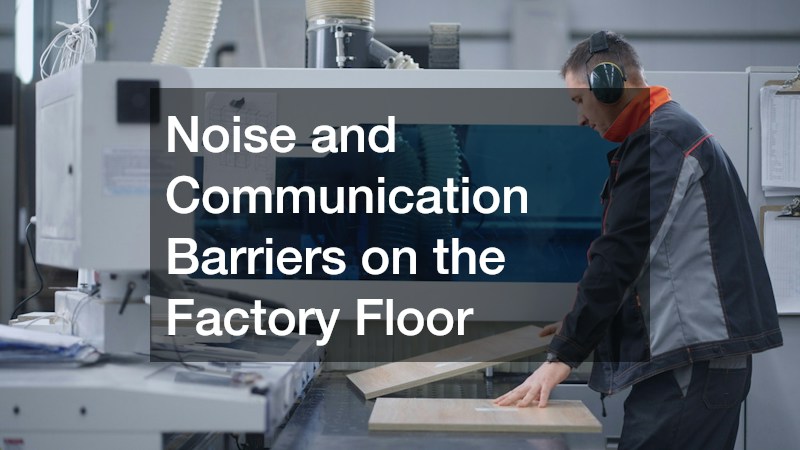
Busy production floors are loud, and that noise makes verbal warnings nearly useless in an emergency. A coworker shouting to stop or warn someone about an approaching machine may simply not be heard over grinding, hissing, or mechanical hums. This communication gap is a major contributor to near-miss incidents in facilities running heavy equipment. Visual alert systems exist for this reason, but not everyone knows how to interpret them.
Hearing protection, while necessary for long-term health, can make the problem worse by further isolating workers from ambient warning sounds. Facilities need layered alert systems that combine lights, floor markings, and vibration alerts rather than relying on sound alone. Anyone spending time near active machinery should learn the facility’s specific warning signals before starting work or taking a tour.
- Flashing lights often indicate an active or resuming cycle
- Floor markings signal restricted zones that change based on equipment status
- Vibrating alert wearables are becoming more common in large facilities
- Hand signals remain useful when sound and sight both fail
Maintenance Windows and False Assumptions of Safety
Many injuries happen not during normal operation but during maintenance, when people assume the equipment has been fully powered down. Residual energy in hydraulic or pneumatic systems can cause unexpected movement even after a machine appears off. This is why proper lockout and tagout procedures exist, yet they are sometimes skipped when workers are in a hurry. Anyone unfamiliar with these procedures should never assume a quiet machine is a safe one.
Maintenance periods also introduce human error, since technicians working inside a machine’s range may trigger sensors meant for normal production use. A system still partially connected to its control software can misread a technician’s movement as a signal to resume a cycle. This overlap between human presence and machine logic is one of the least understood risks among people outside the industry.
- Stored hydraulic or pneumatic pressure can cause sudden motion
- Lockout tagout procedures must be fully completed, not assumed
- Technicians can accidentally trigger sensors during repairs
- Partial power-downs are riskier than complete shutdowns
Training Gaps for New Employees and Visitors
A significant portion of workplace incidents involving automated systems trace back to insufficient orientation rather than equipment failure. New employees, temporary staff, and visiting business partners are often given a brief safety talk without hands-on demonstration of how nearby machines actually behave. This gap leaves people guessing about safe distances and proper responses during an alert. Companies that invest in thorough onboarding see measurably fewer incidents involving automated equipment.
Even experienced workers transferring from unrelated production roles can struggle when first exposed to a new facility layout, since equipment placement, traffic patterns, and warning systems vary from site to site. Proper training should include real demonstrations of emergency stops, clear boundary markings, and a walkthrough of how to recognize an active cycle versus a paused one. Skipping this step to save time often costs far more in injuries and downtime later.
- Hands-on orientation reduces incident rates more than verbal briefings alone
- Emergency stop locations should be demonstrated, not just pointed out
- New hires need time to observe a full operating cycle before working nearby
- Visitors should always be escorted rather than left to navigate independently
Conclusion
Working or spending time near automated machinery does not have to be dangerous, but it does require real awareness of how these systems behave and fail. The hazards outlined here are preventable with proper training, clear communication systems, and a healthy respect for equipment that can move without warning. If you are evaluating a facility, starting a new role, or simply researching this topic for your own safety, use this knowledge to ask informed questions before you ever step onto the floor. Taking that extra step now can prevent a costly or life-altering incident later.
